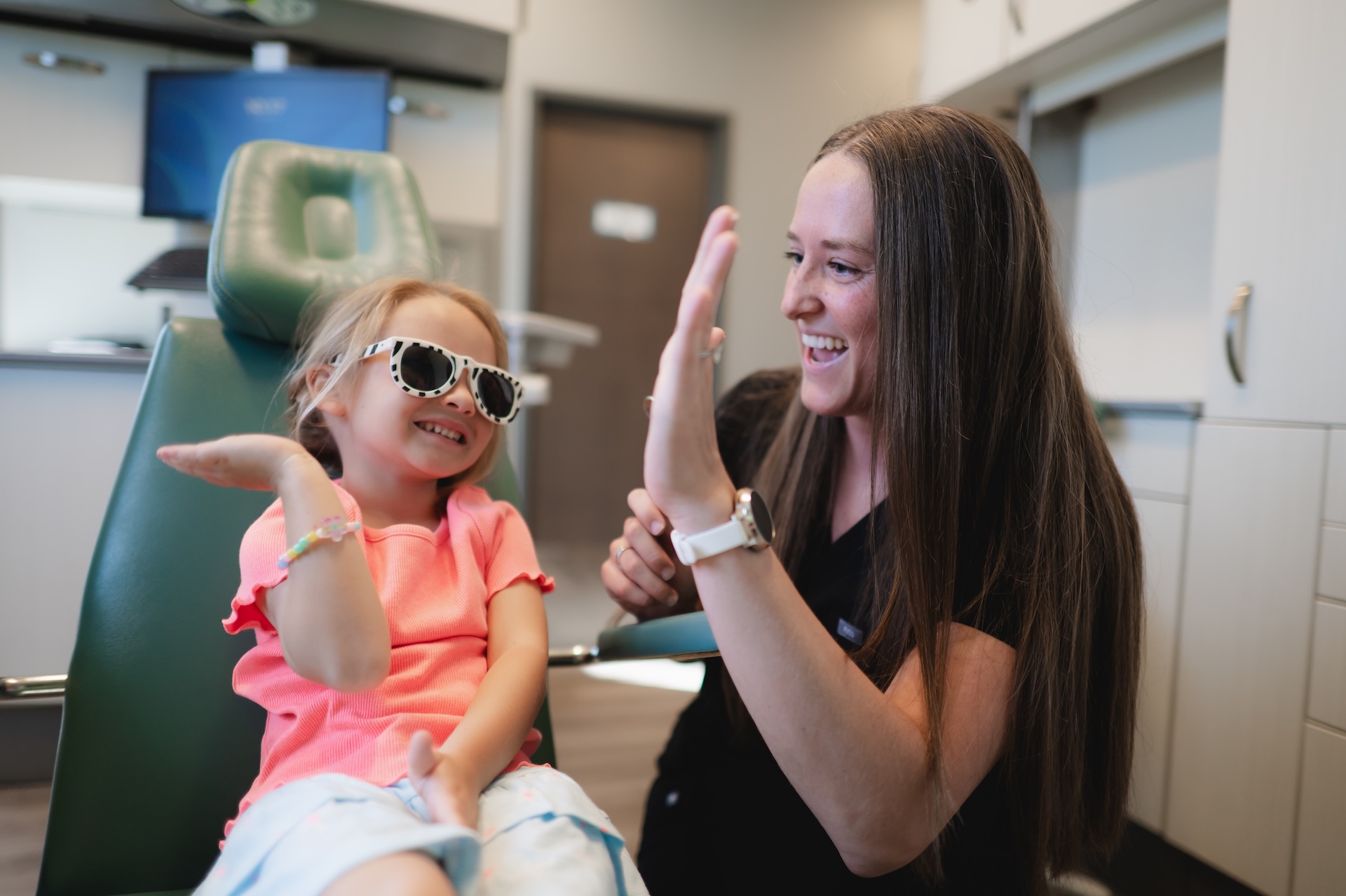
If you're wondering whether your child really needs a pediatric dentist, or just any dentist who'll see kids, here's the short version: a pediatric dentist spends years training specifically in how children grow, behave, and heal, which changes everything about how a visit feels for a nervous little one. At Hines Little Smiles in Columbus, our team cares for children from their very first tooth through the teen years, and the whole place is built around making kids feel safe rather than scared.
This is a thorough, parent-to-parent guide to children's dental care in Columbus. Whether you're scheduling a first appointment for a one-year-old, working through a toddler's cavities, or figuring out how to help a child who melts down in the chair, we've tried to answer the real questions families bring us.
Continue reading to learn how our approach helps children enjoy the care they need.
Choosing a dental home for your child feels like a small decision until you're sitting in the waiting room with a kid who's already on the edge of tears. A family dentist treats patients of every age, which is a real skill. A pediatric dentist does something narrower and, for young kids, often better suited: after dental school, they complete two to three more years of training focused entirely on children. You can read more about what sets our approach apart at Hines Little Smiles.
That extra time covers things adult dentistry never has to think about much:
The difference shows up in the room, too. A pediatric office is sized and paced for children, the language is kid-friendly, and the team has spent years learning that a four-year-old who feels in control behaves completely differently from one who feels cornered. Kids notice when a space was made for them. That's a big part of why children who start out anxious so often leave smiling.
Earlier than most people guess. The American Academy of Pediatrics and the American Academy of Pediatric Dentistry both recommend a first dental visit by age one, or within six months of the first tooth appearing. We hear "I had no idea it was supposed to be this soon" almost every week.
Plenty of families wait until age three or four, figuring there's not much to look at yet. But the early months matter. Baby teeth can decay quickly, and feeding, pacifier, and thumb habits all shape how a mouth grows. Small things caught early stay small, which spares everyone the harder visits later. Our comprehensive smile care is built around catching those small things while they're still small.
And baby teeth aren't just placeholders that fall out anyway. They hold space for the permanent teeth coming behind them, they're essential for chewing and clear speech, and a painful baby tooth can absolutely keep a kid up at night. Losing one too early to decay can crowd the adult teeth and create problems that follow a child for years.
A first visit with us is low-key on purpose. Think meet-and-greet more than procedure: short, gentle, and built mostly around conversation with you. We'll show you how to clean those tiny teeth, talk through what's normal, and let your child get used to the friendly faces. Kids who start young tend to feel at home in the chair.
Knowing the shape of a visit takes a lot of the worry out of it, for you and for your child. A visit usually unfolds like this.
Once your child is comfortable, the dentist counts and checks the teeth, looks at the gums and bite, and watches how everything is developing. For a toddler, this can be done knee-to-knee, with your child resting back into your lap so they're never far from you. It's quick, and we narrate the whole way so nothing comes out of nowhere. If this is your child's first time with us, our new patient center walks you through everything to bring and expect.
A gentle polish removes plaque and surface stain, and we'll often finish with fluoride to strengthen the enamel. For little ones, this is mostly about getting them used to the feeling of having their teeth cleaned by someone who isn't you.
X-rays aren't part of every visit. They're taken when there's a specific reason, like checking for cavities hiding between teeth or watching how permanent teeth are forming. Pediatric digital X-rays use very low doses of radiation, and we use protective shielding, so the exposure is small and the information is genuinely useful.
Most children do well with a checkup and cleaning every six months. Some, depending on cavity risk, enamel, or habits, benefit from more frequent visits, and we'll tell you plainly if that's the case for your child. The steady rhythm keeps small issues from turning into big ones, and it's how kids build a comfortable relationship with the dentist.
If your child screams, cries, or clings to you at the dentist, you're in very normal company, and it's not a sign you've done anything wrong. Fear of the dentist is one of the most common things we work with, and the techniques for handling it are real, learnable, and effective.
The backbone is a method called tell-show-do. We explain what's about to happen in words a child understands, show them the tool or the step up close so nothing is a surprise, then do it gently at their pace. A child who's in on the plan behaves very differently from one who's just being acted upon.
Alongside that, a few things make a real difference:
For some kids, comfort techniques are enough on their own. For others who need more help, gentler options like nitrous oxide are available. We never lead with sedation, and we never want a child forced through something that doesn't have to be hard either.
"Is laughing gas safe for my four-year-old?" comes up a lot, and it's worth understanding the full range so you can make a calm decision. Here are the dental sedation options, from lightest to deepest. Not every option is right, or available, for every child, and a good pediatric dentist will only recommend what genuinely fits.
Safety always comes first: a thorough health history, clear instructions about eating and drinking beforehand, and close monitoring throughout. The right choice depends on your child's age, anxiety level, medical history, and how much treatment is needed, and it's a decision we make with you, never for you.
The least stressful cavity is the one that never forms, which is why prevention is the heart of pediatric dentistry. The toolkit is simple and it works.
Prevention also includes the conversation: catching cavity risk early, talking through diet and habits, and tracking how the teeth and jaw are developing. Kids who stay on a steady preventive rhythm tend to need far less of the harder dentistry down the road.
"My three-year-old already has cavities, what do I do?" First, breathe. Early childhood cavities are common, treatable, and not a verdict on your parenting. What matters now is fixing the problem and protecting the teeth coming behind it. Here's how decay and damage get treated, from least to most involved.
Some of the earliest oral health questions have nothing to do with cavities. A tongue-tie or lip-tie happens when the small band of tissue under the tongue or behind the upper lip is tight or short enough to limit movement. In a newborn, that can make breastfeeding painful or frustrating, with trouble latching, poor weight gain, and a baby who never seems satisfied at the breast.
Signs worth a closer look include:
When a tie is genuinely restricting function, a frenectomy, a quick release of that tight tissue, often done with a laser, can make a real difference. Not every tie needs treatment, though, so a careful evaluation matters more than rushing to a procedure.
Airway and breathing belong in the same conversation. How a child breathes and how the jaw develops are connected, and signs like chronic mouth breathing, snoring, or restless sleep are worth mentioning. Our sleep apnea screenings help catch these things early.
Every child deserves a dental home where they feel safe and welcome, and that's especially true for kids with autism, sensory sensitivities, Down syndrome, anxiety disorders, or complex medical histories. A standard dental office isn't always built for these kids, and one overwhelming visit can set a child back for a long time. That's why our team focuses on dental care for anxiety and special needs right here in Columbus.
Better care here is about flexibility, not just kindness. The kinds of accommodations that help include:
When a calm, accommodating environment isn't enough on its own, sedation can be part of the plan. The point is always to find what works for your specific child. If your child has been "too difficult" elsewhere, that usually means the approach was wrong, not the child.
Good dental health is built in the small everyday moments far more than in the twice-a-year checkup. The home routine doesn't have to be complicated. Here's how it shifts as your child grows.
If those habits ever feel overwhelming, you're not alone, and we love walking families through them at every appointment.
Sugar matters more than most parents expect, and frequency matters as much as amount. Juice, even 100% fruit juice, is one of the sneakiest culprits, and slow sipping all afternoon is harder on teeth than finishing a drink with a meal. Water is the best between-meal choice, hands down.
If your child uses a pacifier or sucks their thumb, don't panic. Most kids stop on their own before it affects anything. If the habit is still going strong past age three, mention it at the next visit so we can keep an eye on how the bite is developing and help you ease them off it if needed.
Dental emergencies love bad timing, and knowing the plan ahead of time keeps panic from making things worse. The good news is most pediatric emergencies look scarier than they are, and quick, correct action makes a big difference. Here are the common ones and what to do first.
If your child gets anxious in moments like these, our team is experienced in helping kids who feel nervous at the dentist, so we can keep things calm while we take care of the problem.
One thing worth knowing: a hospital ER can manage your child's pain, but it isn't set up to fix a tooth. Calling a dental office first usually gets your child the right care faster. Reach us at (614) 475-5439 and we'll walk you through what to do next.
One of the most common searches we see is some version of "how much does the dentist cost without insurance," and the honest answer is that it depends on what your child needs. A routine checkup and cleaning sits at one end; treatment like crowns, pulp therapy, or sedation costs more. The right way to get a real number is a visit, where we can look, explain what's going on, and go over costs and payment options before anything is decided. No surprises.
We're a fee-for-service practice, which means we focus on care decisions based on what's best for your child rather than what a plan will or won't cover. If you have dental benefits, we're glad to help you understand how to use them, and we'll talk through payment options for families who need flexibility. The goal is for cost to be a clear, upfront conversation, not a worry hanging over the appointment.
We're located at 5770 N Hamilton Rd, Suite A in Columbus, OH 43230, easy to reach for families across the Columbus area.
From your child's first tooth through the teen years, the team at Hines Little Smiles is here to make the dentist something your kid actually doesn't mind. When you're ready, call us at (614) 475-5439 and we'll help you find a time. It helps to have your child's date of birth and any dental benefit details handy, but really, all you need to bring to that first visit is your kiddo. We'll take care of the rest!
Call 614-475-5439 or request an appointment online to set up your first visit. We’ll be in touch soon.