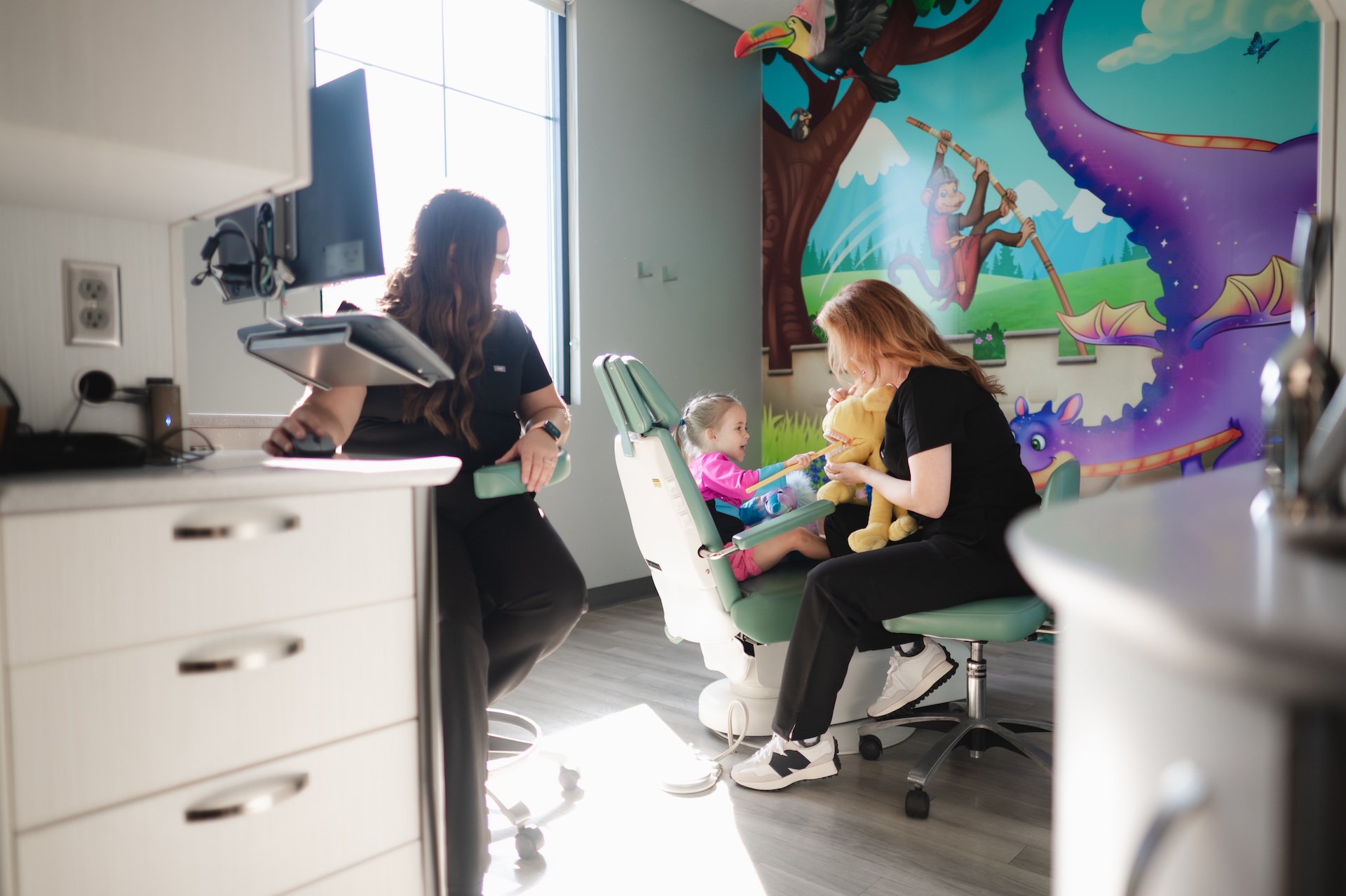
If your child cries before appointments, refuses to open their mouth, or becomes overwhelmed at the thought of visiting the dentist, you're not alone. Dental anxiety is one of the most common challenges parents face, and it's something pediatric dentists are specially trained to help children overcome. With the right approach, many kids who begin treatment feeling fearful gradually become more comfortable and confident at each visit.
At Hines Little Smiles, Dr. Hines, Dr. Radigan, Dr. Hawk, Dr. Leukart and our team work with anxious children every day. Through child-focused communication, a welcoming environment, and individualized care, we help children build positive dental experiences that can last a lifetime.
This guide explains why dental anxiety happens, how pediatric dentists help children feel safe, and what parents can do before, during, and after appointments to support their child. We'll also cover when additional support, such as sedation or specialized behavioral techniques, may be appropriate and how to choose a dental home that's the right fit for an anxious child.
Dental anxiety is one of the most common concerns pediatric dentists see, and it can look different from one child to the next. Some children become quiet or withdrawn, while others cry, complain of a stomachache, or refuse to sit in the dental chair. These reactions are normal and don't mean your child is being difficult or that you've done anything wrong as a parent.
For many children, dental fear develops because of one or more common triggers, including:
The good news is that dental anxiety is highly manageable. With child-focused communication, positive experiences, and a gradual approach that builds trust, many children become more comfortable with each visit. Pediatric dentists are specifically trained to recognize these fears and respond in ways that help children feel safe, supported, and in control. Throughout this guide, we'll explain how those strategies work and what parents can do to help.
Helping children feel comfortable at the dentist is a specialty in itself. Pediatric dentists complete two to three additional years of training after dental school, focusing on child development, behavior guidance, preventive care, and treating children with diverse medical, developmental, and emotional needs.
That specialized training matters because children don't all experience fear in the same way. A preschooler who is anxious about sitting in the dental chair requires a very different approach than an older child who is worried about pain or embarrassed about treatment. Pediatric dentists learn how to communicate at every stage of development, helping children understand what's happening while building trust throughout the visit.
The goal isn't simply to finish today's appointment. It's to help children develop positive experiences that make future dental visits easier and support lifelong oral health.
At Hines Little Smiles, that philosophy guides everything we do. Dr. Hines, Dr. Radigan, Dr. Leukart, and Dr. Hawk each completed advanced pediatric dentistry residencies at nationally respected children's hospitals, giving them extensive experience caring for anxious children and those with special healthcare needs. Their combined expertise allows our team to meet each child where they are and adapt care to their individual comfort level.
A child's experience begins long before the dentist looks at their teeth. From the moment they walk through the door, they're taking in their surroundings, deciding whether this feels like a place they can trust.
That's why pediatric dental offices are intentionally designed with children in mind. Rather than creating an environment that feels cold or intimidating, every detail is meant to help young patients feel more relaxed and comfortable.
At Hines Little Smiles, that includes:
The environment is only part of the experience. Just as important is how our team communicates. We explain each step using age-appropriate language, answer questions patiently, and give children time to become familiar with new experiences instead of rushing them through treatment.
Those small details often make a big difference. We've had children tell us our treatment rooms look like bedrooms instead of dental offices, while others have happily suggested additions to our play area. Moments like those remind us that when children feel comfortable enough to smile, laugh, and explore, they're already building a healthier relationship with dental care.
Creating a positive dental experience isn't about convincing children to be brave. It's about using proven behavior guidance techniques that reduce uncertainty and build trust one step at a time.
One of the most widely used approaches is Tell-Show-Do. First, we explain what we're going to do using simple, child-friendly language. Next, we demonstrate the instrument or procedure in a non-threatening way, often letting children see or touch it first. Only then do we begin treatment. Breaking each step into predictable stages helps remove the fear of the unknown.
Depending on your child's needs, we may also use techniques such as:
These techniques are backed by years of pediatric dental research and experience. For many children, they are all that's needed to transform a stressful appointment into a positive one.
At Hines Little Smiles, behavior guidance is part of every visit. We tailor our approach to each child's personality, age, and comfort level, providing additional support for children with anxiety, sensory differences, or special healthcare needs so they can receive care in a way that feels safe and manageable.
One of the best ways to help a child feel comfortable at the dentist is to start before fear has a chance to develop. That's why the American Academy of Pediatric Dentistry recommends scheduling a child's first dental visit by their first birthday, or within six months of the first tooth erupting.
While that may sound early, these first visits are less about treatment and more about building familiarity. Children who have calm, positive dental experiences early in life are often more confident during future appointments because the dental office already feels like a safe, familiar place.
A first visit is intentionally simple and may include:
Early visits also allow small concerns to be identified before they become larger problems. Preventive care is almost always easier, more comfortable, and less stressful than treating issues after they've progressed.
Whether your child's first visit is at age one or later, the goal is the same: helping them build a positive relationship with dental care that lasts well beyond childhood.
Most children become comfortable with dental care using behavior guidance techniques alone. Occasionally, though, a child needs additional support to receive treatment safely and comfortably.
Sedation isn't a last resort or a sign that anyone has failed. For some children, including those with significant anxiety, special healthcare needs, extensive treatment needs, or previous traumatic experiences, it can make dental care far less stressful.
Depending on your child's needs, treatment may involve:
The right choice depends on your child's age, medical history, anxiety level, and the type of treatment they're receiving. Your pediatric dentist will explain each option, answer your questions, and recommend the safest approach for your child's individual needs.
Parents have a bigger influence on dental anxiety than they often realize. Children naturally look to the adults around them to understand whether a new experience feels safe, so a calm, positive approach at home can make a meaningful difference.
A few simple strategies can help prepare your child:
It's equally helpful to avoid a few common mistakes:
You don't have to prepare perfectly. For most children, seeing a calm parent and knowing what to expect is enough. If your child has significant anxiety or sensory sensitivities, letting the dental team know ahead of time allows everyone to plan for a more comfortable experience.
Every child experiences the dental office differently. For children with autism, ADHD, sensory processing differences, developmental disabilities, or previous medical trauma, a routine appointment may require additional planning and flexibility.
Pediatric dentists receive specialized training to adapt care for children with a wide range of individual needs. Rather than expecting every child to adjust to the environment, the environment and approach can often be adjusted to better support the child.
Depending on your child's needs, accommodations may include:
The goal is never to rush a child through treatment. It's to create an experience where they feel respected, supported, and safe enough to receive the care they need.
Before your child's appointment, sharing information about their preferences, triggers, communication style, or previous experiences helps the dental team create a plan tailored specifically to them. That preparation often makes all the difference in helping children have successful, positive dental visits.
Some nervousness before a dental appointment is completely normal, especially for young children or those visiting a new office. In many cases, that anxiety gradually fades as children have positive experiences and build trust with their dental team.
Sometimes, though, the fear is more intense and doesn't improve over time. Signs that your child may need additional support include:
If any of these sound familiar, it doesn't mean dental care isn't possible. It simply means your child may benefit from a more individualized approach. That could include longer appointments, additional behavior guidance techniques, sensory accommodations, or sedation when appropriate.
Addressing dental anxiety early is important because fear has a way of reinforcing itself. When appointments are postponed, small dental concerns often become larger ones that require more involved treatment. Those more complex visits can make future appointments feel even more intimidating, creating a cycle that's difficult for families to break.
The encouraging news is that this cycle can be interrupted. With patience, consistency, and the right support, many children who once struggled with dental visits go on to feel comfortable receiving routine care.
There isn't a single solution that works for every child, and that's exactly why pediatric dentists use a variety of comfort techniques. Depending on your child's personality, developmental stage, anxiety level, and treatment needs, several approaches may be combined to create the best experience.
For many children, behavior guidance techniques such as Tell-Show-Do, distraction, and positive reinforcement provide all the support they need.
Others benefit from additional options, including:
The goal is never simply to complete treatment. It's to help children receive the care they need while building confidence for future visits.
If you've been searching for a pediatric dental team that understands anxious children, we'd love to meet your family. Whether your child is coming in for their very first appointment or has had difficult dental experiences in the past, we'll take the time to move at a pace that feels comfortable for them.
If you have questions, we're happy to talk through them before you schedule. When you're ready, visit Hines Little Smiles at 5770 N. Hamilton RD. Suite A, Columbus, OH 43230 or explore our New Patient Center to learn what to expect at your child's first visit. We look forward to helping your child build a healthy, confident smile—one positive visit at a time.
Call 614-475-5439 or request an appointment online to set up your first visit. We’ll be in touch soon.